

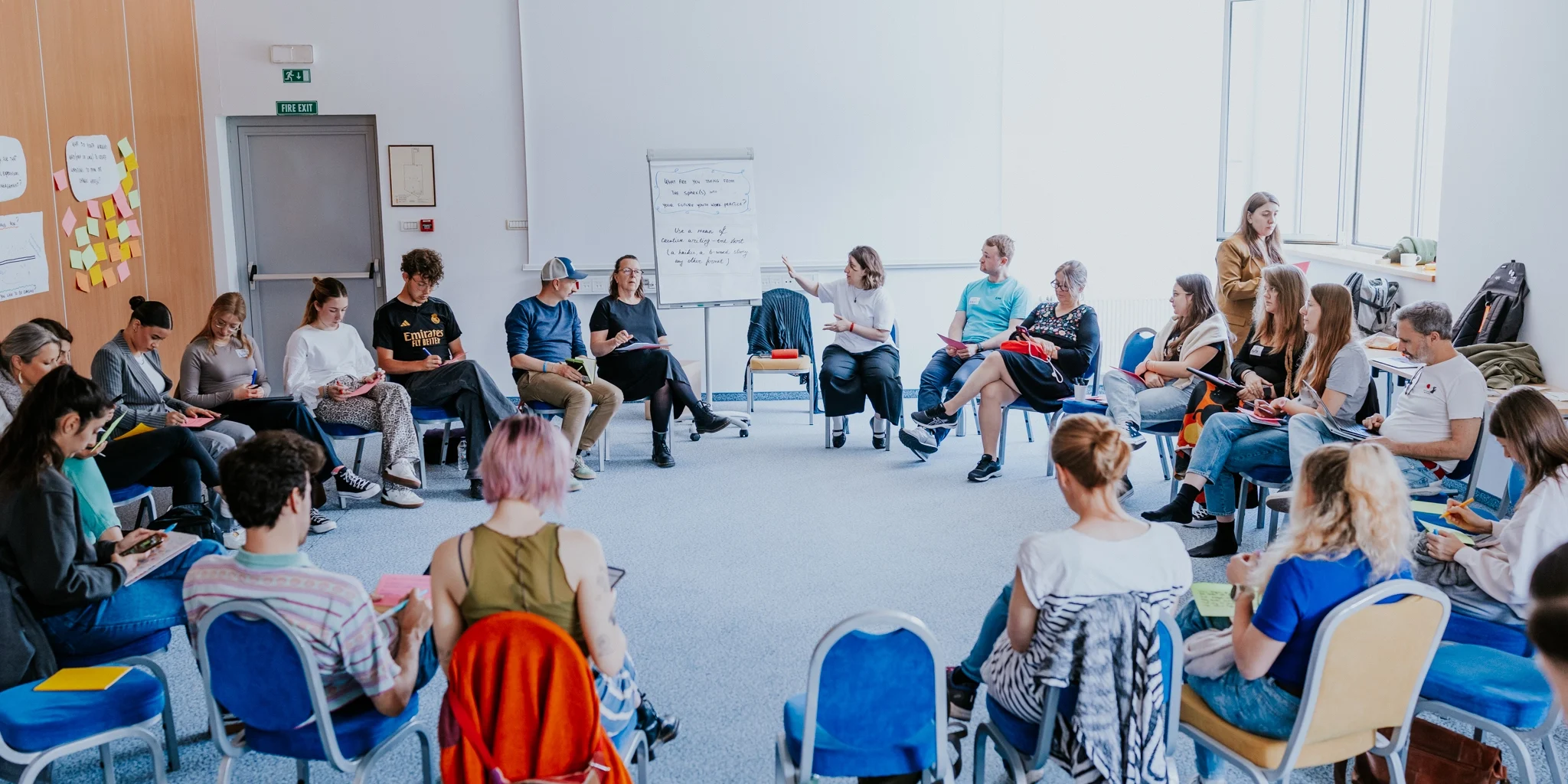
 On the last morning at the 4th European Academy on Youth Work in Kranjska Gora, facilitator Darko Marković reminded the room: “We don’t sell fruit at the Academy. We collect seeds.” Before heading home, every participant named one seed of action they wanted to plant in their own work.
A few months on, we wanted to know what had started to grow. We caught up with three participants and asked what they took home, what they did with it and what has changed since the Academy in May 2026. Their stories come from very different places: a support group in Latvia, youth consultations in southern Portugal and a youth-led space in Rome. Here they are, in their own words.
From “what is wrong” to “where we can go”: futures thinking enters youth consultations in Portugal
A Portuguese youth worker and trainer took a futures method from the Academy into a youth consultation with 30 young people, and now uses it in all his consultations.
Afonso Borges spends most of his working days with young people aged 16 to 30, in rural southern Portugal and in towns with few services. He is a non-formal educator, youth worker and trainer, and we interviewed him in writing in September 2026.
 In Kranjska Gora, Afonso joined a parallel workshop called “Conversations to restore Hope”, led by Academy co-facilitator Anita Silva. It used futures thinking and radical imagination. The method works like this: young people first imagine, in detail, the place they want their community to become. Then they work backwards to the concrete steps that could get them there. On 29 May, three weeks after the Academy, Afonso tried it in a youth consultation back home. In June, he shared the results with other Academy participants at an online follow-up meeting. Today the method is part of every consultation he runs and of his training work with youth workers.
He sees a clear reason why this matters now. Many of the young people he meets distrust political decision-making and see elected politicians and formal structures of participation as ineffective. Far-right parties and populist speech are on the rise, and democratic engagement is low. Armed conflicts in and near Europe, growing prejudice and the climate crisis add to a wider feeling of inaction and hopelessness. Afonso’s answer is to start with hope.
What did you take from the Academy, and what did you do with it back home?
I conducted a consultation process that led to the design of a youth manifesto using the method of futures thinking and radical imagination, based on a parallel workshop led by Anita Silva during the Academy.
It was a way to engage young people in a more hopeful process of imagining their territories and local policies to achieve their “dream realities”. Once they had created the vision, they set out concrete and realistic steps to achieve it. The method was a combination of world-café with futures thinking & radical imagination.
The work session took place in Lagoa, in the Faro district of southern Portugal, and gathered around 30 young people (16 to 21 years old) active in civil society organisations from two Portuguese municipalities.
It was quite successful and, from my perspective, really paradigm-shifting, both personally and as a professional working in consultation processes. The approach changed perspective from “what is wrong” to “where we can go” and “how to get there”.
Has anything changed in your work since then?
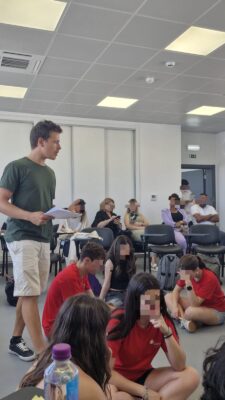 I have adopted this methodology in all the consultation processes I’ve run recently. I’ve also made “restoring hope” a holistic element of my work on youth participation, both with young people and as a trainer working with other youth workers. I see it as key to sparking motivation, agency and a sense of initiative and action in young people and youth workers. It’s an actual competence without which we can’t have a future perspective and act for a vision of the society we want to live in. It is increasingly difficult, given all the conflicts and challenges we face collectively today. But that is also why it has never been more relevant. I have been framing hope as a core competence for young people and youth workers, and I make this explicit in the learning objectives and expected outcomes. This applies to youth participation, but also to other topics that benefit from hopeful thinking about the future, such as mental health and media literacy.
For example, in early October, I facilitated a mobility project on sustainable entrepreneurship in rural areas. It started with a practical activity that combined art and social entrepreneurship. Participants reflect on their local communities and use futures thinking and radical imagination to envision their future, and how entrepreneurship can create meaningful change. They then recreate that vision as maquettes made from recycled materials. Throughout the programme, they develop these ideas further into social businesses, projects, events or other initiatives. This activity was the starting point.
“It’s an actual competence without which we can’t have a future perspective and act for a vision of the society we want to live in.”
Afonso Borges
Has anything changed beyond your own work?
Nothing clearly visible yet, but I’ve used the method several times now and I’ve received positive feedback from colleagues and from youth workers and young people taking part in my activities.
Hopefully, it has inspired other youth workers to use the approach, giving more importance to the method and the values behind it. In terms of working opportunities, I have recently noticed more demand for my freelance work at the local level, on youth participation and mobility projects. This may partly be due to the visibility my work has gained from using these methods.
What have you heard from the people taking part?
People have told me how relevant the positive and hopeful approach is, and how it makes reflecting on the future and on youth participation lighter and more engaging, fostering creativity and freedom of thought in a very positive way.
Ideas to take away
Let young people imagine their ideal community in detail, then plan backwards to concrete steps.
Afonso mixed a world café with futures thinking and radical imagination in a youth consultation with around 30 young people.
He writes it into the learning objectives and expected outcomes of his activities.
The same approach works for topics such as mental health, media literacy and social entrepreneurship.
In a rural entrepreneurship project, young people built models of their community’s future from recycled materials.