

Written by Lorena Baric, EAYW rapporteur
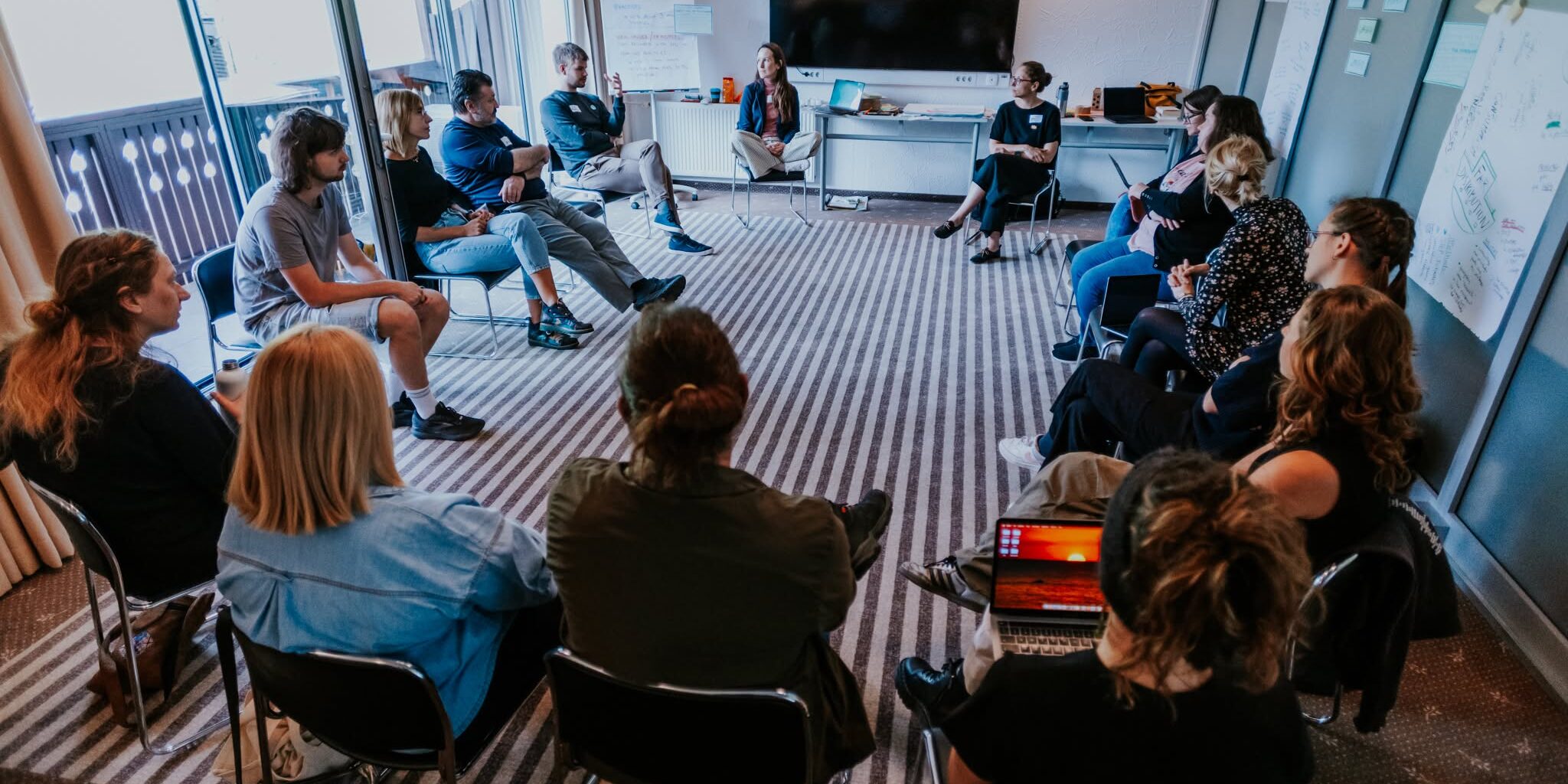
Held at the 4th European Academy on Youth Work, this Deep Dive session explored how climate justice is shaping youth work, with a focus on climate emotions, participation, fairness and repair. Through discussion and reflective exercises during three 90-minute sessions, participants explored how youth work can respond to the crisis in more local, relational and collective ways.
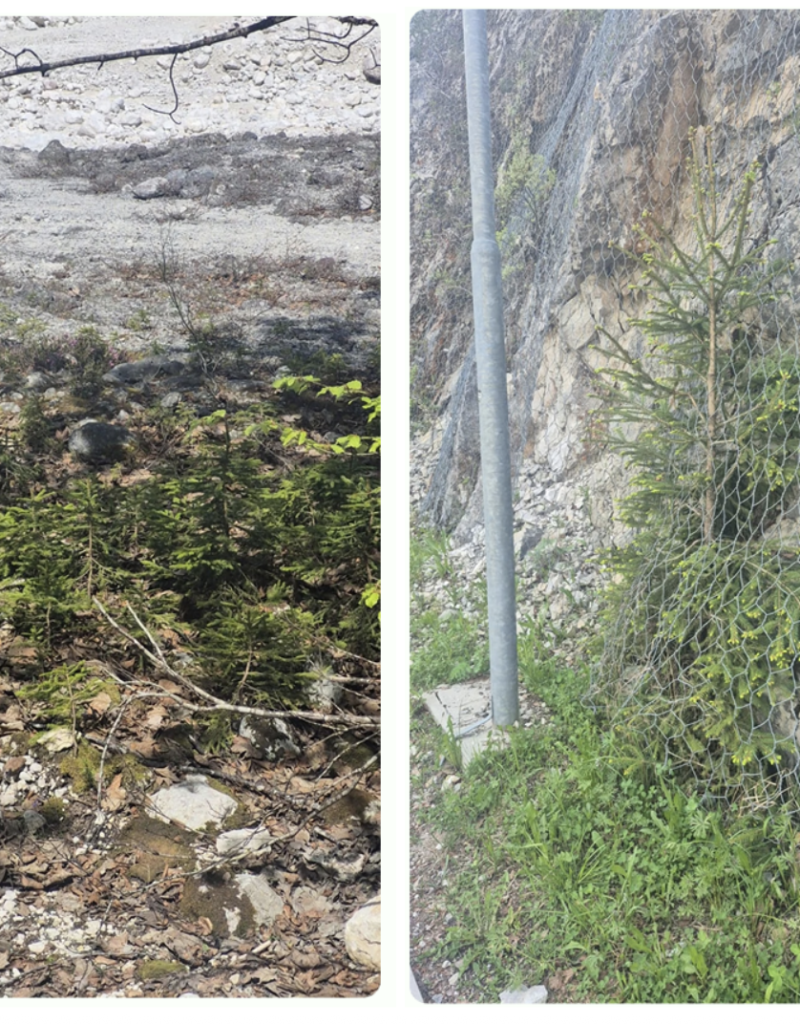
Ilze Jece and Simona Muršec, the facilitators of this Deep Dive, started the Deep Dive by showing the participants a photo of tiny Christmas trees growing straight out of rock. No soil, no shelter, no careful planting and yet they were alive and thriving. Across three 90-minute Deep-Dive sessions, that image kept returning because it captured the real question in the room: what does youth work look like when the crisis is already here, and nobody can promise a quick fix?
This Deep Dive was not about asking youth workers to save the planet on their own. It was about how to stay present when young people bring climate anxiety, grief, anger, guilt or numbness into the room, and how to help turn those feelings into meaning, connection and action.
Why it matters
Climate change is no longer only a topic for environmental workshops. Materials used in the Deep Dive noted that 85% of Europeans see climate change as a major threat, while research across 10 countries found that 45% of young people said their feelings about climate change were negatively affecting their daily life and functioning. The IPCC (Intergovernmental Panel on Climate Change) has, for the first time, recognised mental health as one of the projected impacts of climate change. For youth workers, that means climate change can show up as exhaustion, fear, grief, anger, helplessness and hard questions about the future, even in activities that are not formally about climate at all.
One of the clearest messages from the Deep Dive was that emotions are not a side issue. Participants used climate-emotions exercises to name responses such as fear, guilt, anger, powerlessness, hope and empowerment. That mattered because too much climate work still jumps straight to solutions, as if feelings only slow things down. The sessions argued the opposite: if young people are pushed to act without space to process what they feel, they are more likely to shut down than to stay engaged.
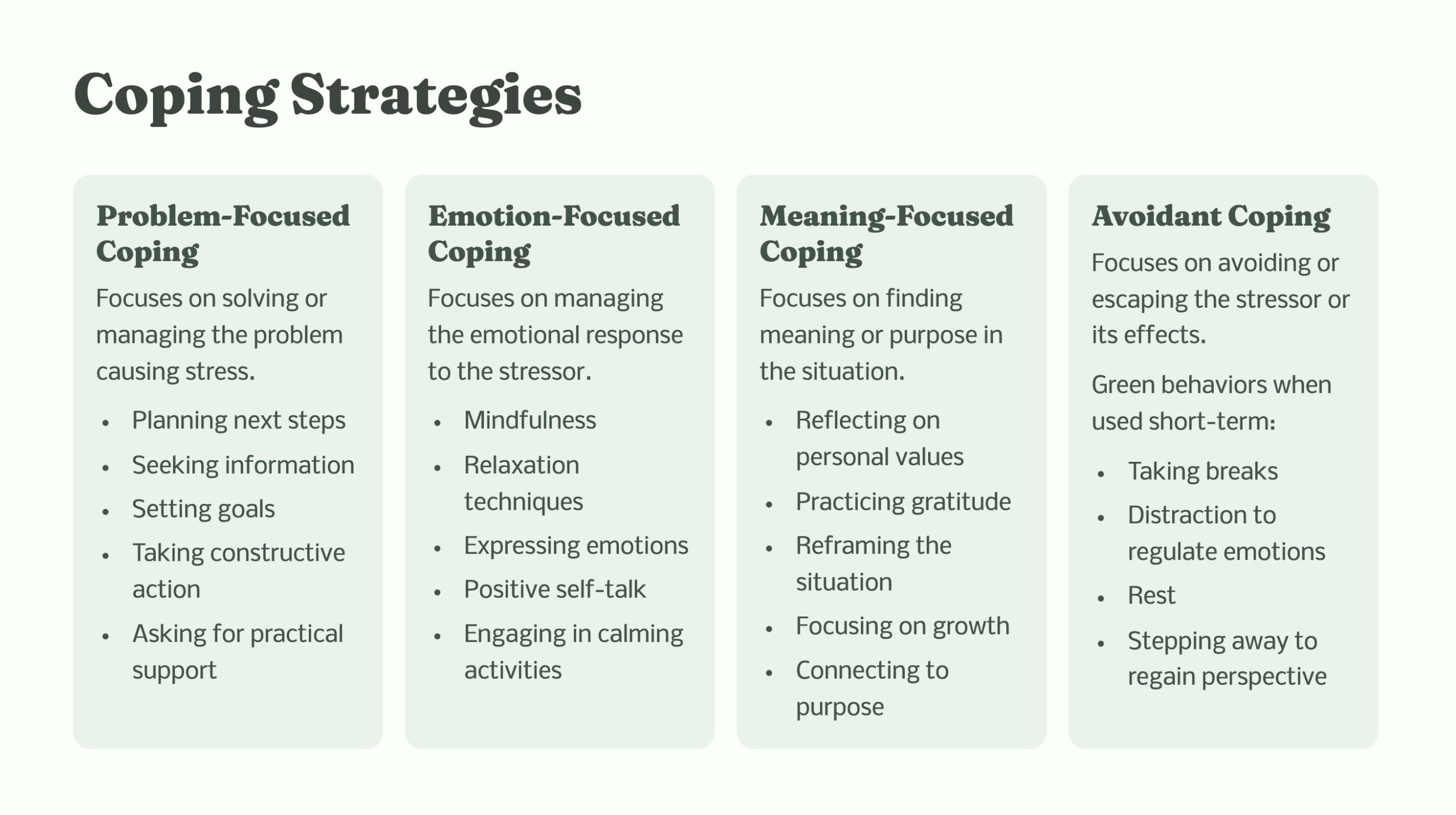
The facilitators presented four strategies for dealing with climate distress. Problem-focused coping is about taking action; emotion-focused coping is about expressing and processing feelings; meaning-focused coping is about reconnecting with purpose and values; and avoidant coping tries to escape the problem but often increases stress in the longer term.
Action and emotion
What became clear in the sessions was that adults often rush toward action because they do not want to sit with grief, fear or uncertainty themselves. As facilitator Simona put it, events often rush to action and solutions because adults are uncomfortable facing difficult emotions themselves. The Deep Dive pushed back on that reflex and made a different case: emotional work is part of climate work, not a distraction from it.
That is a crucial message for youth workers. Their role is not only to inform or activate. It is also to hold space, slow the pace when needed, and make it possible for young people to face difficult realities without being overwhelmed by them. In practice, that means helping young people move from raw emotion to something they can name, share and act on.
Climate justice lens
From there, the discussion moved from feelings to fairness and climate justice. The frame used in the sessions asked youth workers to think through five linked questions: how resources are distributed, whose safety and dignity are protected, who gets heard in climate decisions, who carries responsibility for harm, and what is owed to future generations and the land. That was one of the most useful shifts in the Deep Dive, because sustainability can stop at “how do we reduce harm?”, while climate justice asks who is being harmed, why, and what fairness and accountability would actually require.
 This part of the discussion became sharper when the group looked at examples closer to home. Neringa Jurčiukonytė challenged the idea that climate justice can only be understood through Western European or Global North versus Global South stories. She pointed to examples such as forest clearing in Lithuania being justified in the name of climate action, Denmark’s green image relying in part on polluting pig farms in Latvia, and Serbia burning waste imported from the EU while also being folded into a “green transition” story. The point was not to reject climate justice, but to make it more honest, more local and more useful for the realities youth workers actually face.
Methods that work
Participants kept returning to methods that make climate work feel real and workable for young people: experiential and outdoor learning, arts and documentary tools, role-play and simulation, and breaking huge global problems into local contexts that people can actually grasp. The sessions also stressed that youth workers can help young people move from private worry to public participation, whether that means community projects, local decision-making, advocacy, demonstrations or, in some contexts, climate litigation.
The message was not that youth workers need to become climate scientists or full-time activists. It was that climate work becomes stronger when it is concrete, local and participatory. Young people are more likely to stay involved when they can see where action starts, who it connects them to, and what difference it makes in their own context.
The youth worker role
 Just as important, the Deep Dive turned the lens back on youth workers themselves. Youth workers also carry an emotional load when it comes to climate, and they need to understand their own relationship to climate distress and activism before they can support young people well. That means asking hard questions about whether they are acting from purpose or from overwhelm, and whether the gap between their sphere of concern and their sphere of action has become so wide that it leads to paralysis.
In that sense, the message was not “do more”, but “work in a way that can last”. The strongest takeaway was practical: listen before leading; make space for emotion before asking for action; root climate justice in local lives, local inequalities and local power; and give young people forms of participation that feel visible and real, not symbolic.
What stays with us
That is why the image of the trees on the rock stayed with the group. Nobody was pretending the conditions were good. Nobody was offering false optimism. What the Deep Dive offered instead was a more honest role for youth work: not to fix the climate crisis, but to help young people name what they are carrying, understand the injustice around them, act with others, and keep growing roots even in hard ground.
Key messages from the Deep Dive
The following key messages capture the main insights from the Deep Dive and offer starting points for further reflection.
Young people are already carrying fear, grief, guilt, anger and overwhelm, and youth work needs to take those feelings seriously.
When young people can reflect, they are better able to move from paralysis to action.
They need to understand their own relationship to climate issues in order to support young people authentically.
It is also about power, inequality, participation and repair, because climate harm is experienced differently depending on who you are and where you live.
That means thinking about distribution, safety, dignity, voice, responsibility, repair and intergenerational justice.
Young people need spaces where their voices shape decisions and where action leads to visible change.
Nature-based learning, arts, role play and other participatory methods help young people explore climate justice in a more tangible way.
It is built through connection, honesty and action, and youth work can help create it. Also, hope and frustration can coexist.
Want to find out more about this topic?
If you would like to find out more about the topic, you can find additional materials from the Deep Dive down below. The resources bring together research, reflections and practical tools related to AI, digital youth work and the changing realities of young people’s lives.
They are intended to support further reflection and offer starting points for anyone interested in continuing the conversation beyond the Deep Dive.