

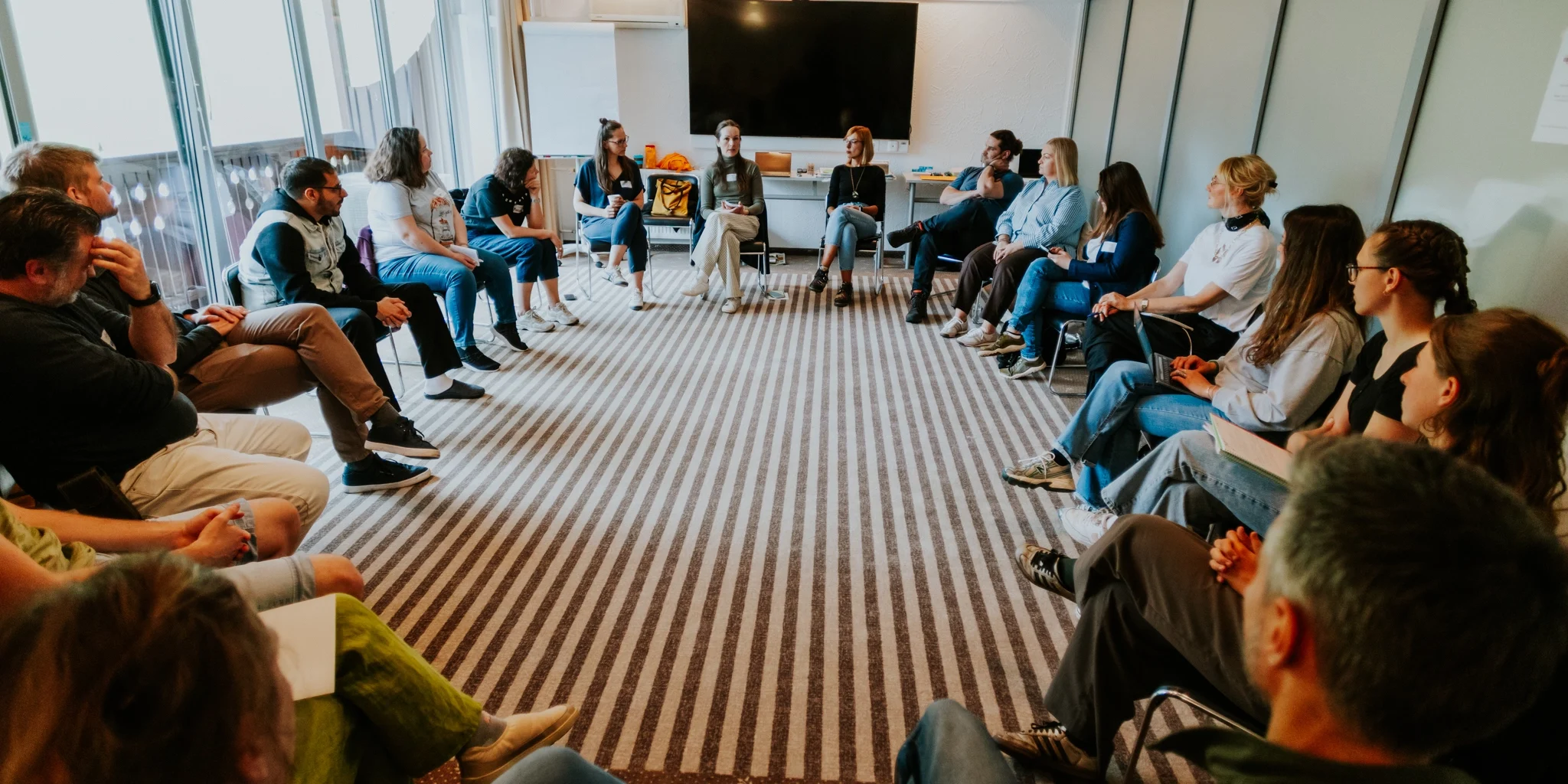
 On the last morning at the 4th European Academy on Youth Work in Kranjska Gora, facilitator Darko Marković reminded the room: “We don’t sell fruit at the Academy. We collect seeds.” Before heading home, every participant named one seed of action they wanted to plant in their own work.
A few months on, we wanted to know what had started to grow. We caught up with three participants and asked what they took home, what they did with it and what has changed since the Academy in May 2026. Their stories come from very different places: a support group in Latvia, youth consultations in southern Portugal and a youth-led space in Rome. Here they are, in their own words.
A support group for climate emotions opens in Latvia
A facilitator of the Academy’s Climate Justice Deep Dive has started a weekly support group in Latvia for young activists dealing with climate emotions.
This interview is with Ilze Jece, a mental health professional, freelance trainer and facilitator of climate anxiety support groups from Latvia.
 It was conducted in writing in September 2026. In May, Ilze co-facilitated the Climate Justice Deep Dive at the 4th European Academy on Youth Work in Kranjska Gora. Over three sessions, the group kept returning to one idea: young people need room for their climate emotions before anyone asks them to act. In September, Ilze put that idea into practice. Seven young activists in Latvia now meet once a week in a support group for climate emotions. In October, an environmental NGO will start group sessions with her for its own staff.
Ilze works in several roles at once. She is a freelance trainer for a number of organisations, coordinates psycho-emotional support in a hospital, and is completing a master’s degree in clinical psychology with a focus on climate distress. She trained with the Good Grief Network, whose support group programme shapes how she runs her groups. Her work takes place in Latvia, internationally and online. The young people she usually works with are already active in their communities, through youth councils or eco-schools. She sees a clear gap at home. Little work on climate emotions is happening in Latvia, especially in youth work, while her own bachelor’s research and other studies from the Baltic region point to growing climate anxiety, particularly among young people.
What at the Academy set this off?
The Climate Justice Deep Dive was the least popular among participants, as not a lot of them signed up for it; however, the conversations we shared during the Dive and feedback I received brought more clarity that this work is incredibly essential and new to many participants. I have spent endless hours reading papers and writing my own and sometimes you forget that the knowledge is uncommon and that there is much I can bring into the room from my own experience as an environmental activist, counsellor, educator, and researcher in the field.
You facilitated the Climate Justice Deep Dive rather than sitting in it, and its central argument was that we should make space for climate emotions before pushing people towards action. Your support group puts that argument into practice. Was the connection deliberate, or did you notice it afterwards?
I had such a strong experience after facilitating a study session on environmental human rights over 14 years ago, where we brought many guest lecturers: activists who had been imprisoned or suffered great losses because of what they stand for. I noticed that the group energy was really down at some points. Then I noticed my own tendency as a facilitator to bring in hope and lightness, fearing that this negativity would affect their learning and well-being. At the end of the day, it was about my own incapacity to sit with the deep sadness experienced by participants.
We know from so much research now how important it is to create space for grieving. When that space is there, there is also a possibility of growth and resolution. But it is a process that takes time and patience. In the environmental activism world we seem not to have time. Instead, there is a fear that time is running out and we have not done enough to protect our precious planet. And it is true. But we need to look for ways to support both our internal processes and our activism, so that we can be environmental warriors not until we burn out and quit, but until we live.
Tell us about the group. Who comes, and what happens in a session?
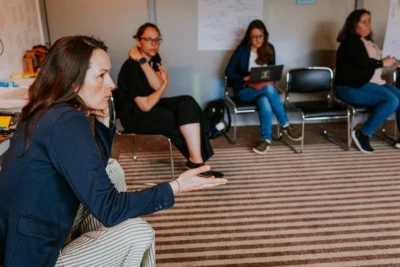
There are now seven young people in the group. They found me online after I made a call for participants. We meet once a week for six weeks, for around two hours. The methodology is based on the Good Grief Network’s 10-step programme. Each session focuses on a topic, and we reflect on our experiences, share our feelings and thoughts, do reflective exercises and some somatic movement. There are no discussions. Instead, it is about being in a space with others where you can be witnessed and witness others and through that be inspired and empowered. Being in a room with people who care is pretty cool and unique. All I do is offer a structure; the rest comes from the participants’ experiences.
Radical imagination exercises come towards the end of the support group, as a tool to envision the future where they belong, where their work today matters. They come at the end so as not to dismiss the hopelessness and depression young people may feel about the state of the world at the start of the process. The support group is not meant to lessen their hopelessness and anxiety. Given the situation in the world, these are natural and much-needed emotional states. But it is important that we help them develop skills to cope with these intense emotional states and counter their negative effects on their quality of life and, ultimately, on the effectiveness of their actions.
The group runs for six weeks. The sessions for the NGO start in mid-October, and a second group, for European youth workers, is planned for the winter.
“Once you cannot imagine yourself in the future, all that you do today becomes draining and pointless.”
Describe one moment from this work that stayed with you.
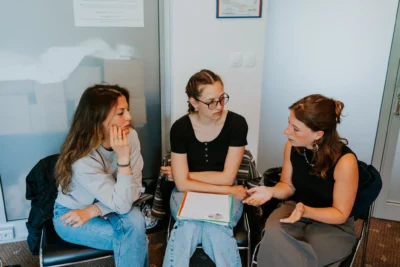
It was the future visualisation exercise. It surprised me, because I discovered that I myself was resisting imagining the future positively due to what I know about climate change facts. At that moment I realised that it might be the key practice, both for me personally and for some of the organizations I work with. We know that bringing hope in the climate change field can feel like gaslighting or annoyingly optimistic, but we also know that losing hope in our lives has huge mental health consequences. Once you cannot imagine yourself in the future, all that you do today becomes draining and pointless. So our ability to dream can be both our refuge and the key to building projects, organizations and systems that counter the state of the world, as it has been in many movements in history. Yet we have never been in a climate change collapse, and it brings out existential thoughts, fears and defences, so it is harder to dream and envision. But I believe it is also a superpower, a skill we can and should develop.
Ideas to take away
Let young people voice fear, grief and hopelessness without pushing them straight into doing something.
Ilze uses radical imagination exercises towards the end of the group, once people have been heard, so their hopelessness is not dismissed.
Her sessions have no discussions: people share, listen and are listened to.
The group meets for six weekly sessions of about two hours, built on the Good Grief Network’s 10-step programme.
Environmental organisations are now asking for the same kind of space for their own staff.