

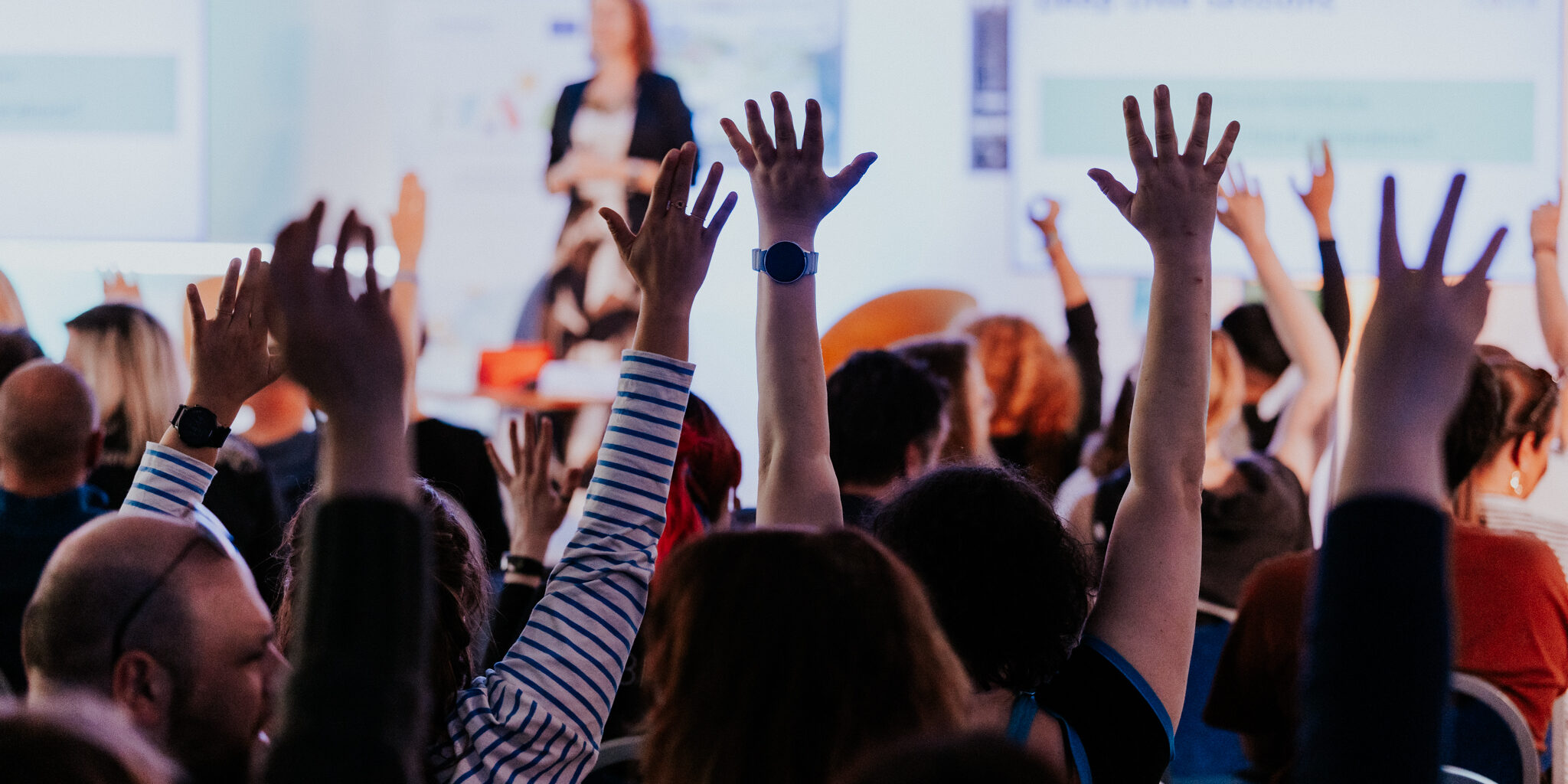
Today we finally got some sun in Kranjska Gora, which everyone seemed to enjoy. Coffees, discussions and games moved to the outside terrace, and we could finally see the mountain peaks through the fog.
The day started (actually it felt like yesterday simply continued) in the final session of the deep dive groups. It was time for conclusions, summarizing, recommendations, and of course, more questions.
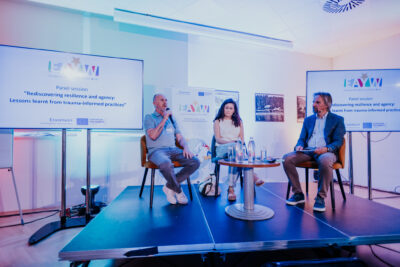 After the coffee break in the sun, more photos and spontaneous terrace conversations, we all moved back to the plenary in the Oval hall. It felt good to be all in the same room again, for the panel Rediscovering Resilience and Agency, with Hranush Shahnazaryan and Dermot O’Brien. We explored how we can borrow insights from trauma-informed practices to support young people, but also the burden on youth workers and ways of dealing with us becoming “containers” for young people’s stories and realities.
Now, this wouldn’t be my blog without a SciFi reference, so brace yourselves 🙂 In The Three-Body Problem, the Wallfacers are individuals chosen to carry the weight of humanity’s survival in total, secret isolation. They are forced to hold everything inside, forbidden from explaining their plans to anyone: a lonely, heavy existence.
Dermot reminded us that as youth workers we often fall into the same trap, thinking we must be Wallfacers for the young people we work with, holding our struggles in secret and trying to save the world on our own. But the panel reminded us that we cannot work in isolation. Resilience is about collective care, not being an individual hero.
In the afternoon we shifted our focus back to the Deep Dives, for a sense of closure.
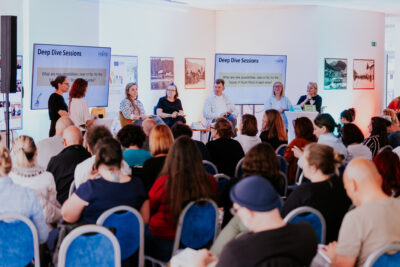 We collectively tried to walk on the shore full of key conclusions and transform everything we had heard into something tangible. To help us make sense of it all, the facilitators from all six groups: Monika, Federica, Laimonas, Gabi, Katja and Simona, stepped up to present the summaries of their sessions. They were the ones who had to do the heavy thinking, translating all those hours of intense discussion into clear sparks of insight.
To be honest, it wasn’t easy to jump from topic to topic, especially after spending so much time in our own specific themes, our own deep dive was the one that made the most sense.
I feel there was also a shared understanding that this wasn’t the end. The real thing will come after the Academy ends, as we take these ideas back home and see how they actually resonate in our daily work.
And to also bring a little bit of “jumping from one topic to another in the speed of light” atmosphere, here is some food for thought (and discussion) from the session:
In developing social skills, we don’t actually need the answers, but connections.
It’s time for youth work to become political again!
We need to learn to live with the fact that hope and hopelessness live in us at the same time.
The power is on us to build new narratives, not only to give space for the narratives of others.
AI is a perfect mental health supporter – it doesn’t judge, it helps you rationalize.
If we speak about resilience, it doesn’t mean we actually become more resilient.If you think we had a shorter day than yesterday (well, first of all thank you for reading the blog passionately) think again: today we also had energy exercises and morning stretching, six parallel Tools Labs where we got to once again experience FOMO of choosing one and missing the others, but also have the opportunity to do something hands on after all the discussions, a fun activity of making shiny edible spheres and a party celebration at the end of the day.
A lot of food for thought, and not a lot of batteries left. So, let’s all recharge for the final Academy day!
Written by: Ana Pecarski